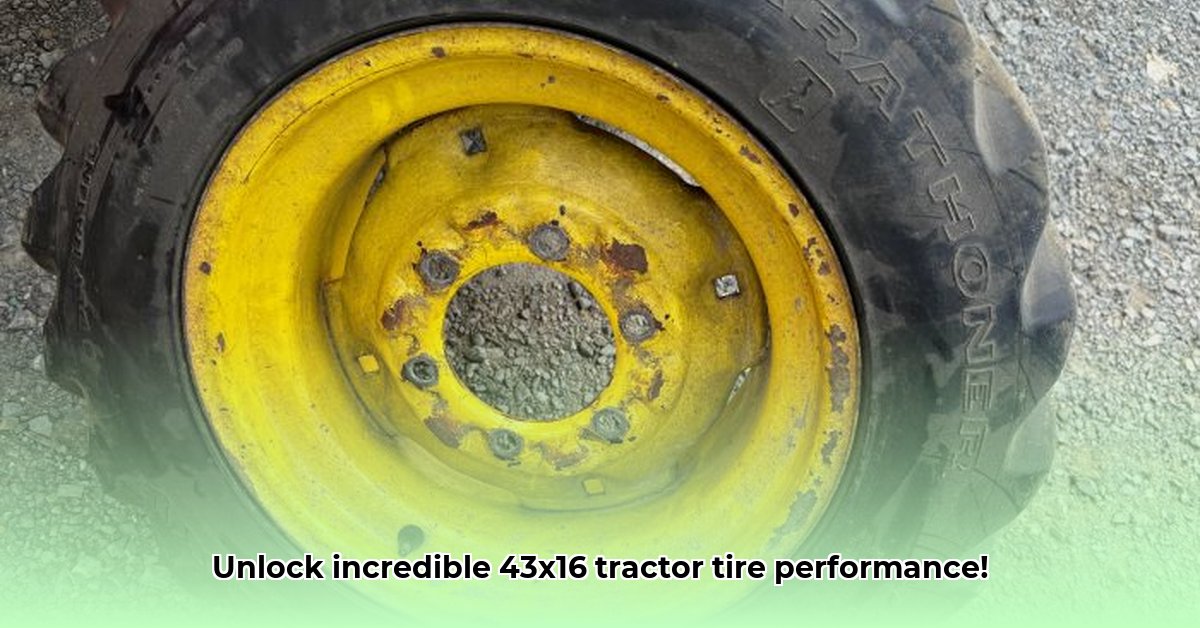
43x16 20 Tractor Tire: Unpacking the Carlisle Xtra Grip R-4
Choosing the right tractor tires significantly impacts operational efficiency and cost. This detailed review analyzes the Carlisle Xtra Grip R-4, a 43x16 20 tire, examining manufacturer claims, available data, and potential limitations. We aim to provide actionable insights for informed purchasing decisions, emphasizing the critical need for independent testing data. For a comparison, see our review of 600x16 tractor tires.
Claimed Features and Available Information
Carlisle positions the Xtra Grip R-4 as a robust tire for demanding agricultural applications. Claimed key features include superior traction, durable construction, and self-cleaning treads. However, inconsistencies exist. Some sources cite an Italian origin, while others claim it's "Made in the USA." This discrepancy necessitates further investigation. One source mentions a 6-ply rating, suggesting high load-bearing capacity. Another source implies suitability for softer surfaces, implying versatility across use cases.
Comparative Analysis: Conflicting Information
The information surrounding the Carlisle Xtra Grip R-4 is fragmented. The lack of a centralized, reliable data source hinders a comprehensive assessment. Conflicting information regarding the country of origin and implied applications raises concerns about product consistency and marketing accuracy. This lack of transparency is a major drawback for potential buyers, who need clear, verified information. Isn't clarity a fundamental right for any consumer?
Performance Evaluation: A Critical Gap
A significant limitation is the absence of independent performance data. Without verifiable third-party testing, we cannot objectively assess traction, wear resistance, load capacity, or fuel efficiency. This lack of evidence significantly hinders our ability to offer a comprehensive performance evaluation. How can we confidently recommend a product without independent verification of its claimed capabilities?
Application Suitability: A Cautious Approach
Based on the available (though limited) information, the Carlisle Xtra Grip R-4 may be suitable for various agricultural applications, particularly those involving rough terrain. However, without performance data, recommending it for specific high-stakes tasks is irresponsible. The tire's versatility remains uncertain due to conflicting information about its intended use cases. Has the manufacturer adequately defined its target market and corresponding functionalities?
Buying Considerations: Prioritize Verification
Before purchasing, several crucial steps must be taken:
Verify Dimensions: Precisely match the tire size (43x16 20) to your tractor's specifications to avoid compatibility issues.
Confirm Compatibility: Consult your tractor's manual to ensure the Carlisle Xtra Grip R-4 is compatible with your equipment. Improper fit can lead to damage and operational safety issues.
Seek User Reviews: Actively search for user reviews and feedback from experienced farmers and agricultural professionals to gather real-world performance insights.
Clarify Country of Origin: Contact the seller or Carlisle directly to resolve the discrepancy regarding the tire's manufacturing location.
Conclusion: Informed Decisions Require Data
The Carlisle Xtra Grip R-4 presents a mixed picture. While its claimed features suggest potential usefulness, the absence of independent testing data and inconsistencies in reported origin significantly hinder a definitive assessment. Until thorough tests and verified user reviews are widely available, buyers should approach purchasing with caution and prioritize thorough verification of claims. Is this level of uncertainty acceptable in today’s data-driven market?
Risk Assessment Summary
- High Risk: Lack of independent performance data, conflicting information on country of origin.
- Medium Risk: Reliance on manufacturer claims without external verification.
- Low Risk: Potential for suitable application in less demanding agricultural contexts.